
Merhaba,
Doç. Dr. Ali Zırh’a hemen ulaşmak için buraya tıklayın.


A New Era in Parkinson’s Disease and Movement Disorders Surgery: Robotic-Assisted Deep Brain Stimulation (DBS)
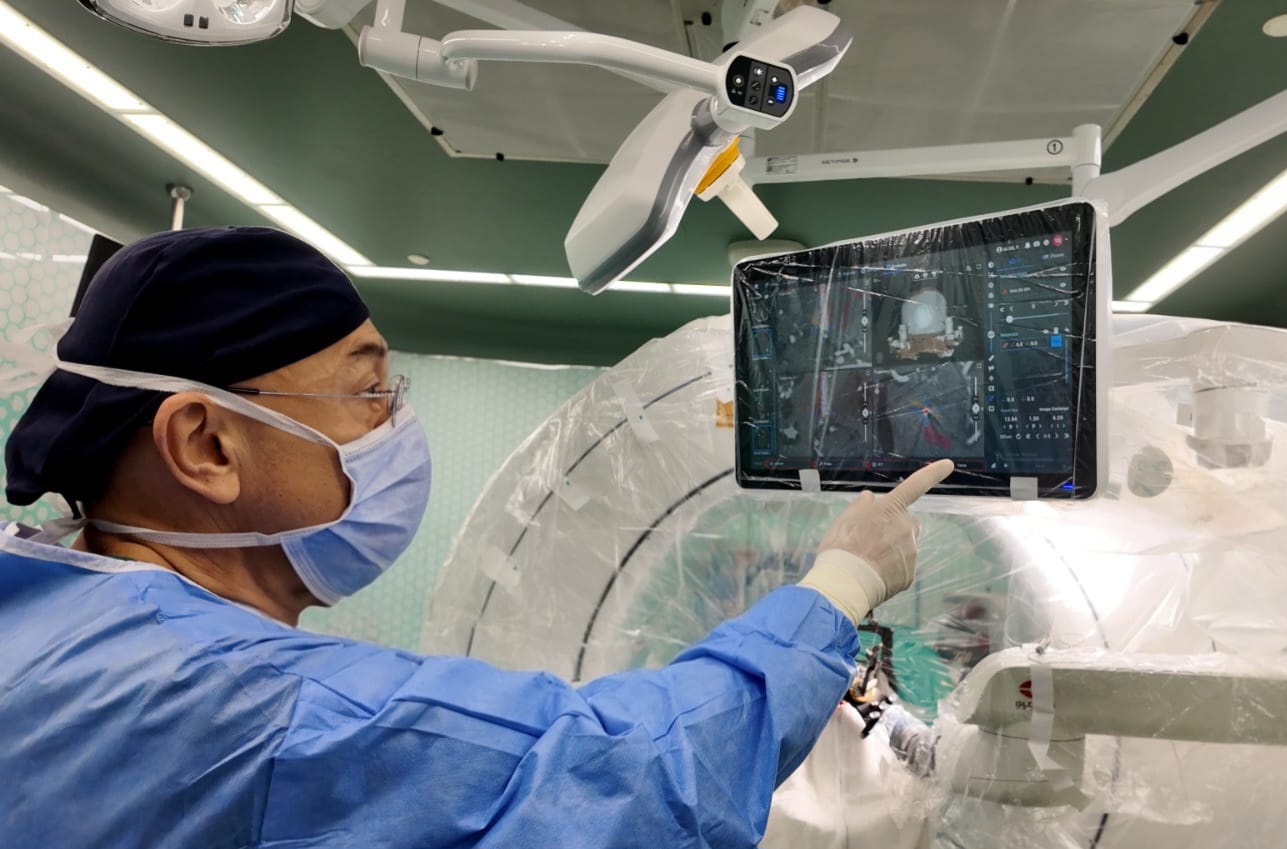
Technology continues to play an increasingly important role in the surgical treatment of movement disorders. In conditions such as Parkinson’s disease, Essential Tremor, and Dystonia, Deep Brain Stimulation (DBS) has become one of the most effective treatment options, now supported not only by surgical expertise but also by advanced imaging and robotic technologies.
One of the most significant recent developments in this field is the integration of robotic navigation systems into DBS surgery.
Why Is Precision So Important in DBS Surgery?
The goal of DBS surgery is to place electrodes into specific target areas deep within the brain, often measured in millimeters. One of the most critical factors determining treatment success is the ability to reach these targets with the highest possible level of accuracy.
Even deviations of just a few millimeters can influence treatment outcomes. For this reason, imaging technologies, navigation systems, and surgical planning software have continuously evolved over the years to enhance precision and safety.
What Is ExcelsiusGPS?
ExcelsiusGPS is a next-generation platform that combines surgical planning with robotic navigation technology.
Before surgery, a personalized surgical plan is created using the patient's MRI and imaging data. During the procedure, the robotic system assists the surgical team in executing this plan with a high degree of precision.
The system helps:
• Define surgical targets more accurately,
• Follow the planned trajectory with exceptional precision,
• Provide real-time imaging guidance,
• Enhance standardization throughout the surgical process.
These capabilities offer significant advantages, particularly in functional neurosurgical procedures such as DBS, where precise targeting is essential.
Can Robotic Technology Replace the Surgeon?
This is one of the most common questions we receive from our patients.
Robotic systems are not designed to replace the surgeon. Rather, they serve as advanced tools that support the surgeon’s expertise, helping to make planning and execution more precise and consistent.
The surgeon remains the primary decision-maker throughout every stage of the procedure. Robotic technology simply assists in implementing those decisions with greater accuracy.
The Era of Personalized Surgery
Personalized medicine lies at the heart of modern movement disorder treatment.
Every Parkinson’s patient has unique symptoms, disease progression, and brain anatomy. As a result, individualized treatment strategies are increasingly replacing standardized approaches.
Robotic navigation systems have become an important component of this patient-specific surgical philosophy, helping tailor procedures to the unique characteristics of each individual.
The Future of Movement Disorder Treatment
Looking ahead, we anticipate broader adoption of artificial intelligence-assisted planning systems, robotic surgical technologies, and next-generation neuromodulation therapies.
Our goal in DBS treatment is not only to maintain current success rates but also to provide safer, more precise, and increasingly personalized treatment options for our patients.
As technology continues to advance, the future of movement disorder surgery promises new opportunities to improve patient outcomes and quality of life.